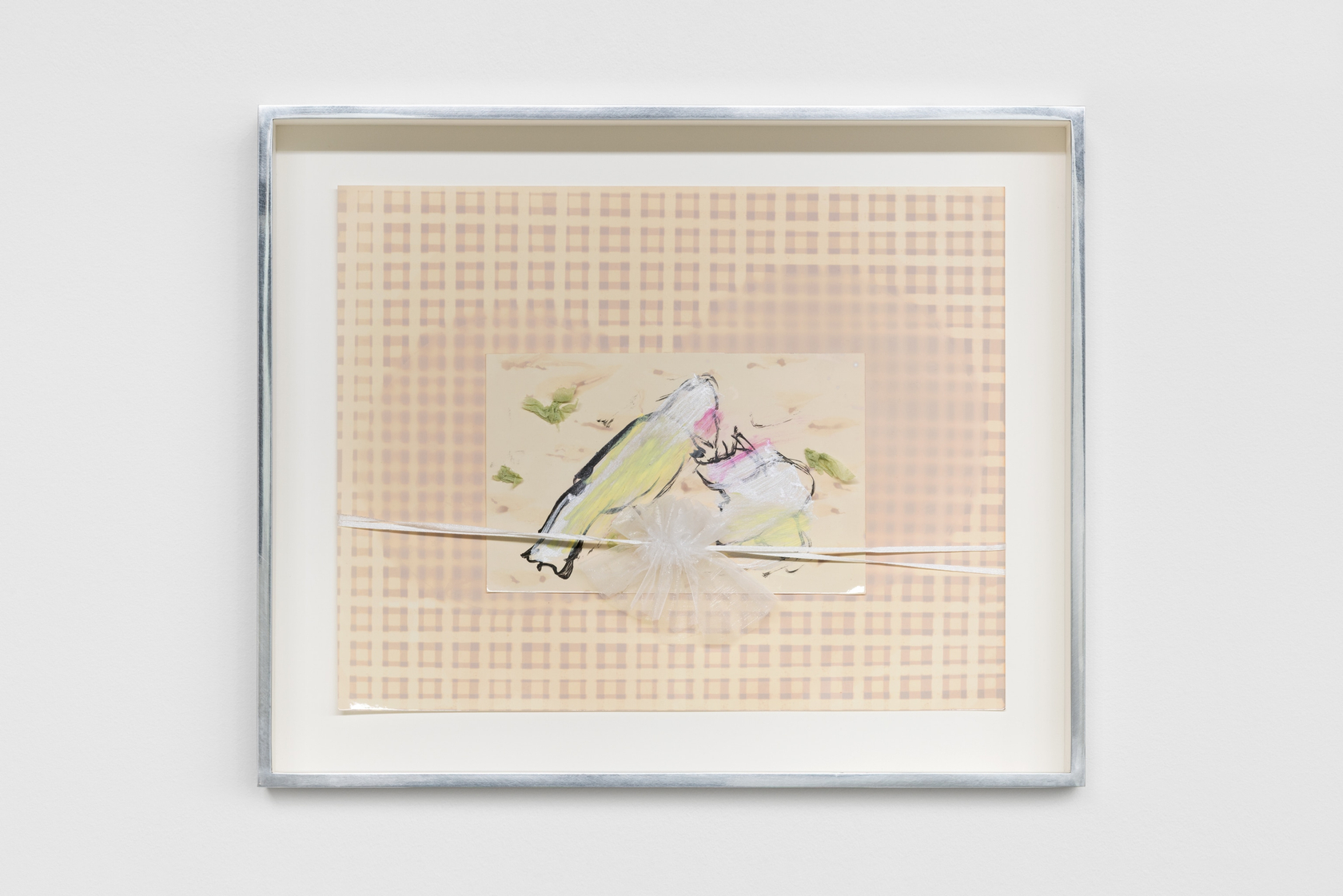

Lotus L. Kang Mesoderm (Empty Full IV), 2025
Photogram, photographic paper, darkroom chemicals, oil pastel, tissue paper, and organza in artist's frame
27,9 x 35,6 x 3,8 cm (unframed)
35,8 x 43,4 x 6,5 cm (framed)
35,8 x 43,4 x 6,5 cm (framed)
Lotus L. Kang's series of works titled Mesoderm are collages made with various silicones and rubbers, photograms, spherical magnets and found or cast aluminum objects. They are rendered in the artist’s recognizable color palette associated with the body – marrow and flesh, blush, and bruise. There are also drawings made with photo paper, darkroom chemicals, grease pencils and oil pastels. In thinking of literal and metaphorical acts of tracing and imprinting, lines and lineage, Kang traces onto acetate before tanning onto the sheets of photo paper.
The works contain imagery that is largely abstracted beyond recognition. In keeping with Kang’s investment in lineage and recurrence, naming said source material is important regardless of its identifiable legibility: historical photographs of women carrying baskets and vessels, containers in marketplaces, anatomical diagrams of organs, the limbic system in the brain, nerves, as well as some personal photographs. In pursuit of an archive of lineage and influence that continually regurgitates rather than digests, Kang constantly adds to this pool of source imagery, most recently through research into the plants and wildlife endemic to the Koreas.
The title of the series, Mesoderm, refers to a body's tissue. The mesoderm is the middle germ layer in early embryonic cell development in most animals. Held between the ecto- and endoderm, the middling mesoderm is a group of cells that contain blueprints for the future organism, much like a seed. The mesoderm, Kang notes, eventually becomes fascia, the thin casing of connective tissue that envelops and holds each organ, bone, blood vessel, muscle, and nerve fiber in its place. Fascia is like an interior layer of skin, a bag inside our bodies, providing internal structure. In Chinese medicine, which Kang has begun close study of in recent years, fascia is considered an organ unto itself.
The works contain imagery that is largely abstracted beyond recognition. In keeping with Kang’s investment in lineage and recurrence, naming said source material is important regardless of its identifiable legibility: historical photographs of women carrying baskets and vessels, containers in marketplaces, anatomical diagrams of organs, the limbic system in the brain, nerves, as well as some personal photographs. In pursuit of an archive of lineage and influence that continually regurgitates rather than digests, Kang constantly adds to this pool of source imagery, most recently through research into the plants and wildlife endemic to the Koreas.
The title of the series, Mesoderm, refers to a body's tissue. The mesoderm is the middle germ layer in early embryonic cell development in most animals. Held between the ecto- and endoderm, the middling mesoderm is a group of cells that contain blueprints for the future organism, much like a seed. The mesoderm, Kang notes, eventually becomes fascia, the thin casing of connective tissue that envelops and holds each organ, bone, blood vessel, muscle, and nerve fiber in its place. Fascia is like an interior layer of skin, a bag inside our bodies, providing internal structure. In Chinese medicine, which Kang has begun close study of in recent years, fascia is considered an organ unto itself.