0

Portrait: Simon Fujiwara Photo © Andrea Rossetti
Exhibitions, Featured, Press
April 13, 2026
Welcome to Simon Fujiwara’s Brave New World
Art Basel Feature
Born in Harrow, northwest London, Fujiwara moved to Berlin in the mid-2000s, where his work began shifting away from autobiography toward the lives of others. In 2016 he made Joanne, a video portrait of his former art teacher at high school, who had resigned after topless images of her were discovered on a USB stick and circulated by students at the school. Five years later, Fujiwara persuaded her to collaborate on a film using the tools of marketing and PR to reclaim her story. 'Everyone is becoming a brand,' he reflects. 'But that work was about turning her brand back into a person.' Mixing glossy photoshoot footage with scrappy iPhone testimonials, the film reframed the scandal into a modern narrative of empowerment.
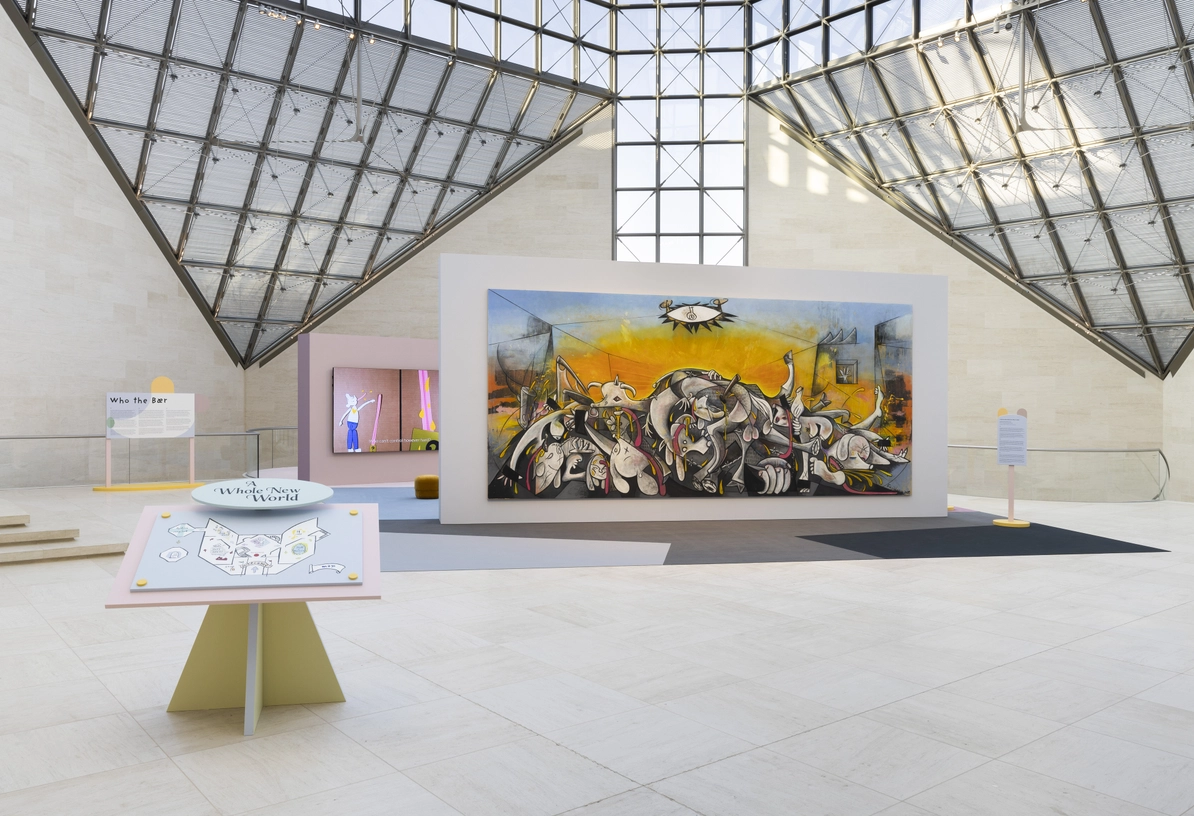
At times, Fujiwara's work appears disarmingly simple, only gradually revealing the dense scaffolding of social critique beneath it. His cartoon bear, Who the Bær (2021-present), is a two-dimensional, endlessly curious invention, meandering through fairy tales, fantasy literature, and great canonical works of art. It functions like an 'avatar,' Fujiwara says of his genderless, identityless creation, which emerged from an anxiety about how to be oneself. 'It feels very unfree to be yourself now. There's pressure to be authentic, to match identity to work. I wondered whether it was even possible to make something about what we share.' His answer - a shapeshifting, undeniably cute bear - plays up to its own appeal and has become one of the most recognizable figures in Fujiwara's oeuvre.


Your shopping basket
No items found