0

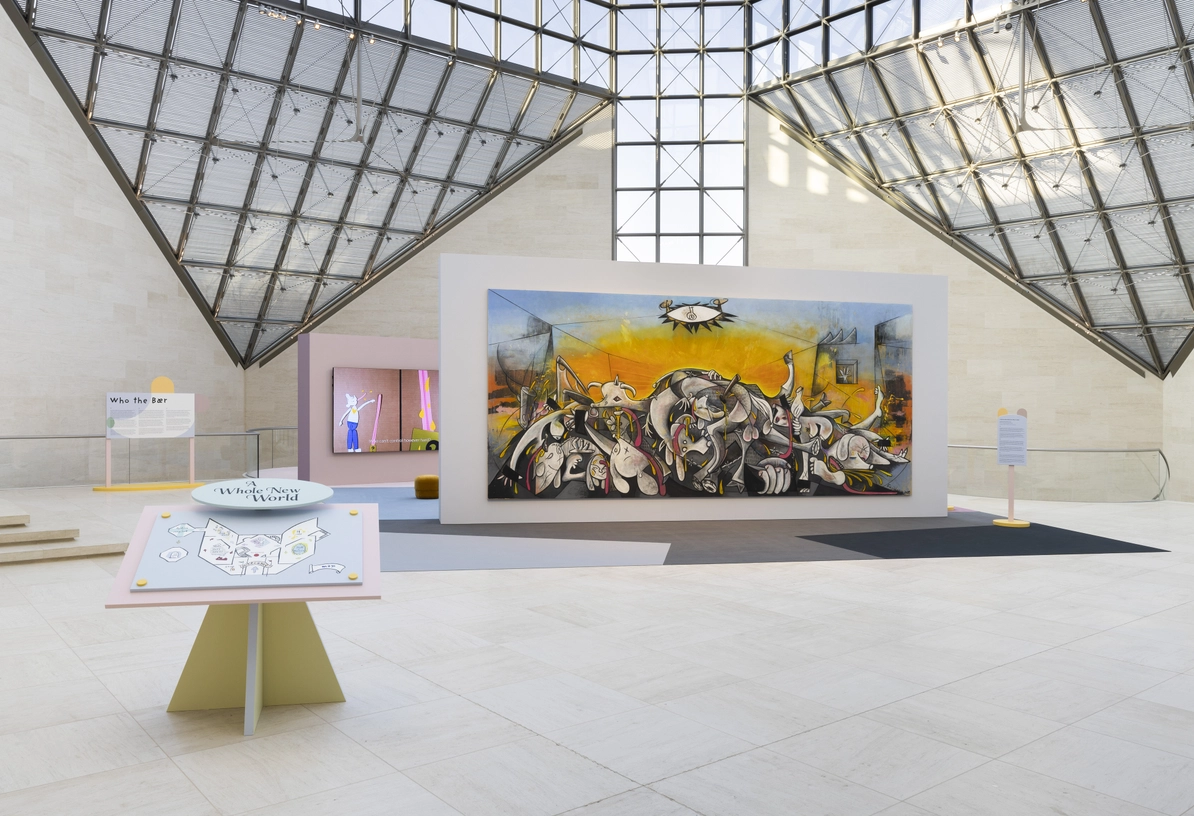
Exhibition view, Simon Fujiwara: A Whole New World, MUDAM, Luxembourg, 2026. Photo © Andrea Rossetti.
Exhibitions, Featured, Press
March 21, 2026
Constructing Identity
Aesthetica Magazine
Born in London in 1982 to a Japanese father and British mother, Fujiwara emerged in the late 2000s as one of the most distinctive voices of his generation. Educated at the University of Cambridge and later at the Städelschule in Frankfurt, he quickly gained recognition for installations that merge autobiography with broader cultural commentary. His early projects often drew from personal experience yet unfolded as elaborate narratives that blurred fact and fiction. Museums and biennials across Europe and Asia soon embraced his work for its unusual combination of humour, theatricality and intellectual rigour. Over time Fujiwara developed a visual language that moves fluidly between sculpture, video, drawing and immersive installation. This versatility allows him to construct entire environments in which visitors encounter stories about identity, sexuality, history and the commodification of experience.
Throughout the past two decades, Fujiwara has staged works that operate like narrative ecosystems, each exploring the ways images construct meaning. Projects such as The Mirror Stage (2009-2013) reflected on the contemporary subject's encounter with endless digital reflections, while Fabulous Beasts (2015-2016) invoked mythological creatures to examine moral ambiguity in modern culture. In Joanne (2016) he turned to the idea of self-reinvention within celebrity culture, probing the fragile boundary between persona and person. Later works extended these concerns into increasingly immersive installations that mirror the logic of media spectacle. The breadth of these projects forms the foundation for the survey at Mudam, which gathers works from across nearly 20 years of practice. The exhibition emphasises how Fujiwara's investigations have gradually expanded into a fully realised conceptual universe.


Your shopping basket
No items found